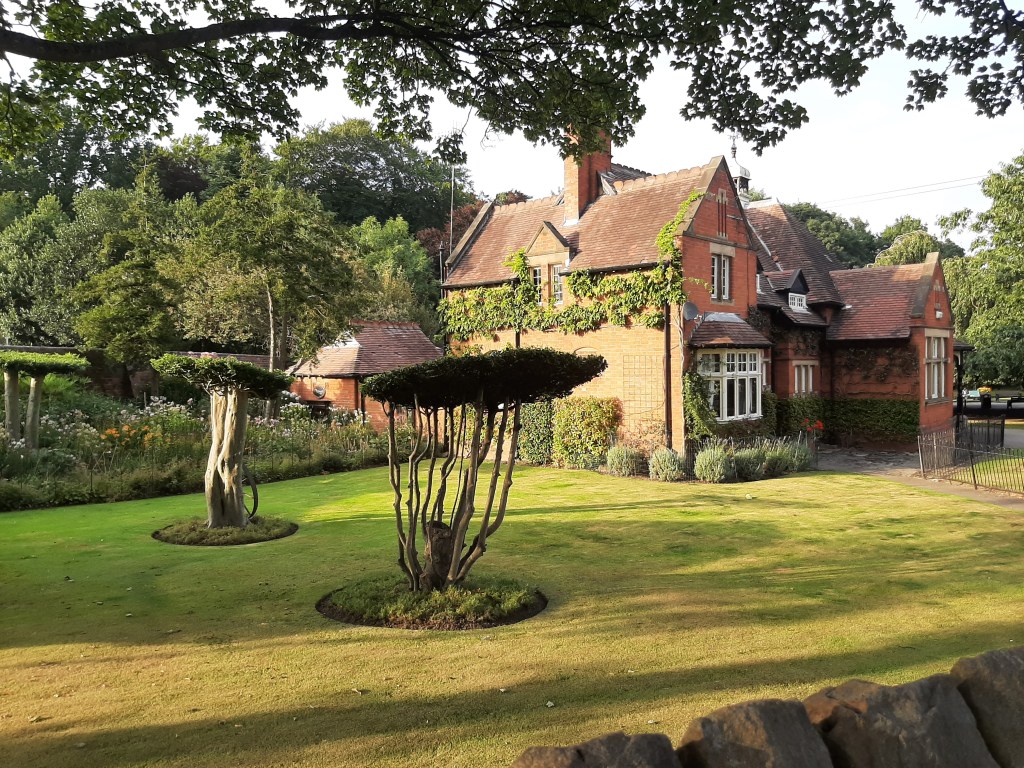
• The Lodge and grounds from Ecclesall Road, when it was still occupied and better maintained, September 2021. Photograph by Amy Graham (copyright).

    The Pavilion near to the Hunter’s Bar entrance to Endcliffe Park was opened on 4th June 1892. It is now designated a Grade II listed building due to special architectural interest (first listed in 1995) and is subject to consultation by Sheffield City Council for potential conversion to a restaurant or other similar use.

    The Pavilion was designed by C F Wike, Borough Surveyor, and built by Messrs Ash, Son & Biggin for £1387. The building originally included refreshment rooms, closets, urinals, and rooms for a caretaker and a policeman. Designed in the Arts and Crafts style, fashionable at the time, the walls are made of red brick with ashlar dressings, the gabled and hipped roofs covered in plain tiles. It is topped with a square wooden bell turret and lead dome finished with a weathervane. The veranda is constructed using turned wooden posts which create five ‘Tudor’ style arched openings.

    The building was converted into a Keeper’s house in 1936 and was occupied, as 710 Ecclesall Road, until July 2023.

    A photo caption mystery

    Named as a ‘bowling green pavilion’ by several sources including this image on Picture Sheffield, the lodge was originally at a higher level of the surrounding pathways and we haven’t been able to find a map which shows a bowling green at this end of the park – there was one at the Rustlings Road entrance to Trippet Wood though!
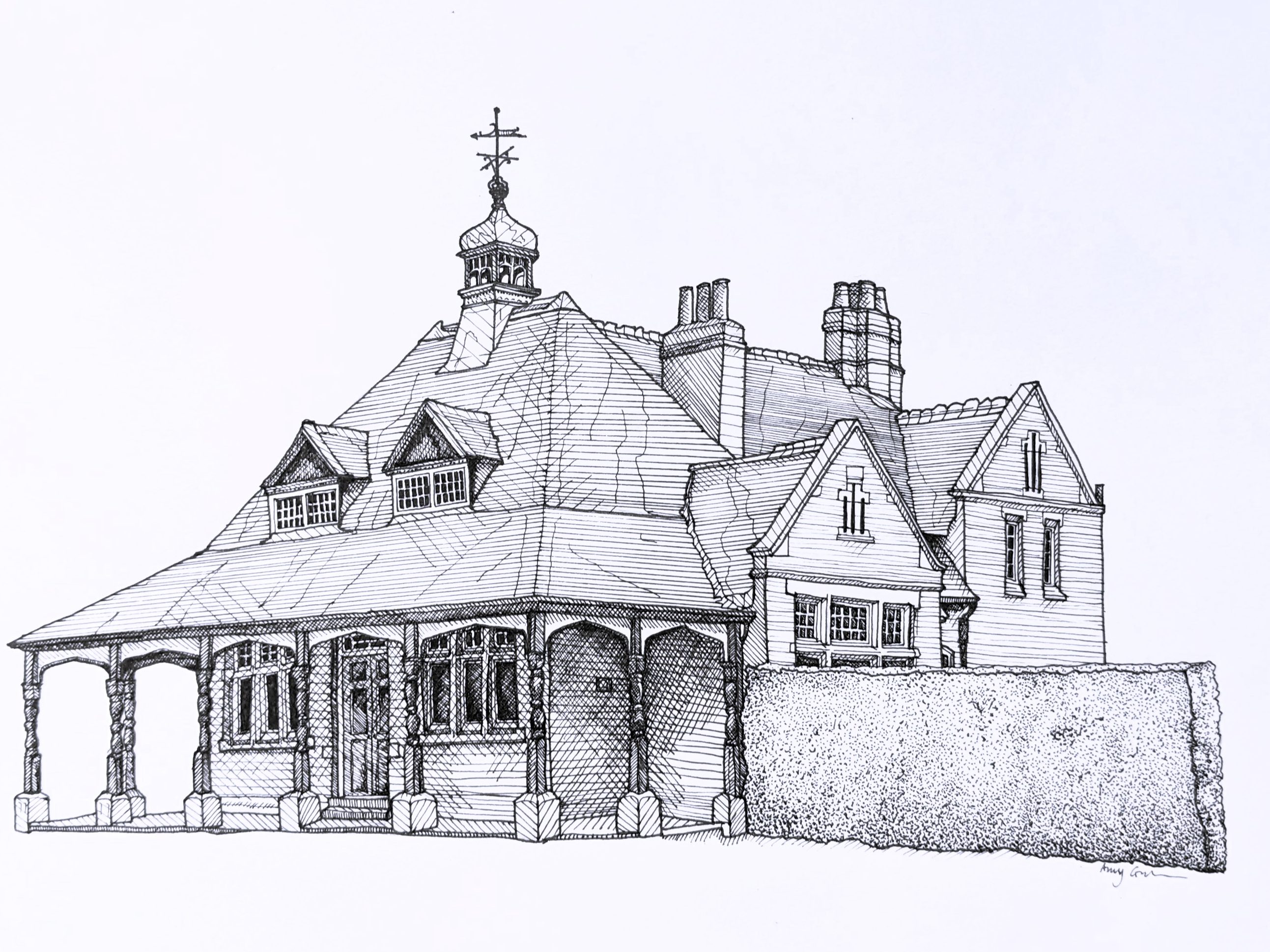
    Endcliffe Park Entrance Pavilion and Lodge, 2025. Illustrated by Amy Graham (copyright).

    I love this building, and have enjoyed looking around it in more detail, noticing little details in the construction such as how the stone bases to the veranda posts have been carved and ditto the bevelling of the stone around the windows. Also trying to work out how the roofs join and drawing the detail of the wooden turret and weather vane – a different way of seeing. When in the park, it’s easy to overlook tucked behind the large weeping willow as you enter and then off to the side of the main path.

    What do you think the Pavilion should be used for next? We’d love to hear your ideas.

    Sources

    Note: this is the second blog post in a series on the history of Endcliffe Park, Sheffield.

  • Endcliffe Park is a well used ‘city’ park, around 2 miles from Sheffield City Centre to the south-west and situated along a part of the Porter Brook. Today it is owned by a charitable trust, with Sheffield City Council the sole trustee and a sub-committee appointed for decision making.

    “how favourite a place for walking and recreation Endcliffe Woods have been for many generations” – from a local newspaper dated 31st January 1885, in Sheffield Local Studies Library newspaper cuttings collection: 942.74SF, Vol.2, p.81.

    The park was established in 1885 with the purchase of lands, later added to through donation and further purchase, so that what was publicly accessible woodland, Endcliffe Woods, would remain so in perpetuity. There’s another part of this park’s origin story, about the need for a new sewer to sort out waste water from Fulwood, which we will write about in another post.

    Endcliffe Park purchase scheme. From a local newspaper dated 31st January 1885, in Sheffield Local Studies Library newspaper cuttings collection: 942.74SQ, Vol.14, p.85.

    The park was known as Endcliffe Woods Park until the mid-20th century, when the name changed to Endcliffe Park, with some local objection (see letters section of the Sheffield Telegraph, 11th July 1947). Today it includes formal paths and flower beds, matured trees and planting, the surviving woodland, a playing field and playground, café, stepping stones and two ponds inhabited by waterfowl such as mallard and mandarin ducks, moorhen, coots, black-headed gulls and the occasional heron or kingfisher. There is also an underused Arts & Crafts style Pavilion which may soon be converted to a new restaurant, and several monuments of different scales, commemorating Queen Victoria, the 10 airmen of the Second World War aircraft ‘Mi Amigo’ and many local people.

    Previous features now lost include a Victorian drinking fountain, which was situated near the Hunter’s Bar entrance, several ornamental bridges lost as the footpaths have been rearranged, a bandstand (demolished around 1957/8), and the former Endcliffe Dam, a millpond now filled in.

    Endcliffe is my local park, so was an obvious choice for my first research subject as part of the ‘Parks Past’ trail project I am undertaking. It’s been great to look at the park through an historical lens and to learn so many interesting things about it. For me, highlights have included understanding more of the symbolism included on the various Victorian monuments, undertaking a ‘drainspotting’ exercise (see this great Sheffield based website on the subject), reading the moving story of the Mi Amigo crew, and more besides!

    Endcliffe Park: A timeline of acquisition

    1885, October 15th: 21 acres purchased for £5235, plus a further ~£2000 spent on laying out the grounds

    1887: 9 acres, forming the playing fields, purchased to celebrate Queen Victoria’s Golden Jubilee, costing £5045

    1927, September 23rd: Extension of 5 1/2 acres presented to the city by Lieutenant Colonel H K Stephenson; this is the land to the north of the former Holme wheel

    1956: Park land lost due to the construction of the Hunter’s Bar roundabout

    Note: this is the first blog post in a series on the history of Endcliffe Park, Sheffield.

  • If you own an older house, it’s likely you won’t know exactly when it was built, with many surveyors’ reports or council records indicating ‘c.1900’, ‘c.1920’ or similar. When your house was built can tell you about how an area has changed, who landowners were and how they made their wealth, and also the history of urban planning in the UK (a fascinating story, not at all as dull as it may sound!).

    Unless the chain of deeds and transactions has survived, you won’t know the names and occupations of former owners and residents. Who lived in your house is an incredibly rich social story, of trades and occupations no longer existent; or of personal triumphs, intrigues and losses.

    When it comes to doing works on your house, you’ll probably come across interesting construction techniques which don’t conform with current building regulations. Being sensitive to the materials used, understanding the system of structural elements and layers, is central to the success of new interventions.

    As we transition to low carbon futures, it is absolutely vital that older, ‘solid wall’ buildings are sensitively altered to prevent problems caused by trapped moisture, whether that’s mould or the need for increased heating or wasteful dehumidification. We can learn how to live with less carbon, by learning how the former residents lived in our houses.

    For all of these reasons, and more, knowing a little about the history of your house can be an incredibly interesting and empowering thing. And Parks and Pavements Past can help, by:

    • conducting house history research on your behalf
    • running workshops online and in person so that you to learn the skills you need to start your own research
    • creating free, easy to understand resources introducing you to local history research and sources

    Over the coming weeks, I’ll be blogging about my own house history research, from first beginning to deep dives into the social lives of former residents. Please comment, like or share, and if you’d like to get started with your own house history, contact us.

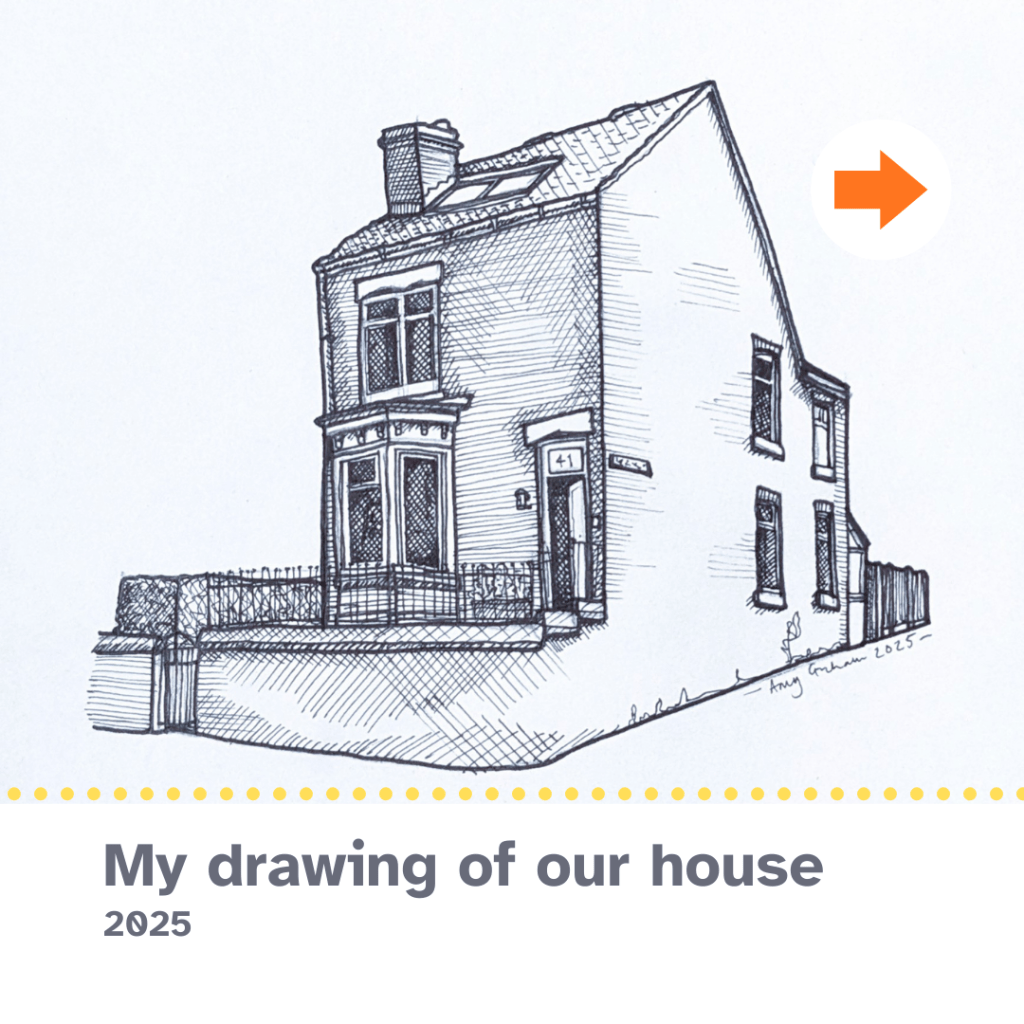
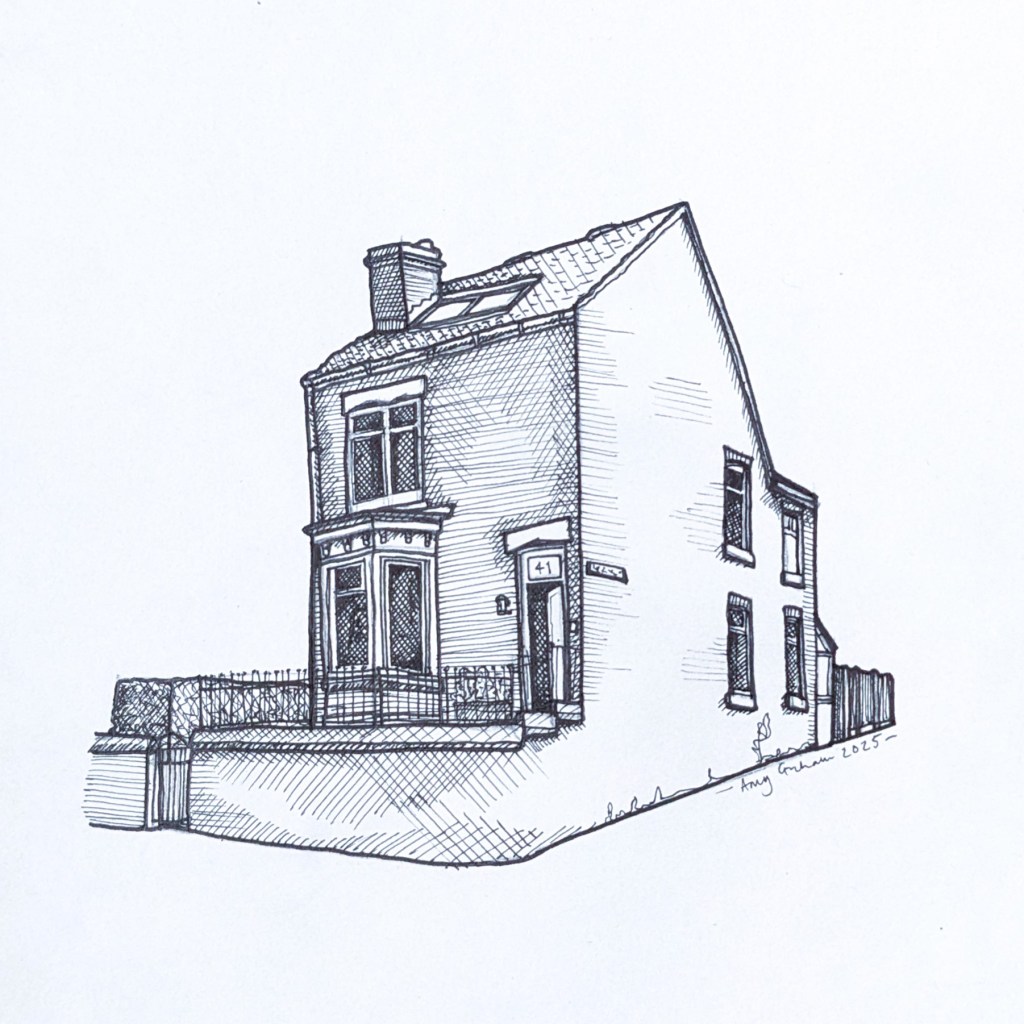
  • My partner and I recently bought our first house together in Sheffield, an end terrace built in the 1890s. I wanted to let friends and family know our new address, and decided to draw a little house portrait to send to them. Here it is:

    This drawing is approximately A5 in size, on an A4 sheet of cartridge paper. It is drawn with pencils, and a ruler, before I add the ink. I then simply took a photo of it, did a bit of digital tidying up and cropped it to the right size for printing.

    Contact us to discuss your own house portrait with digital image for sharing (none commercial use only). Prices start at £40.

  • The Sheffield General Cemetery Trust were refreshing their web and print interpretation after securing investment from the National Lottery Heritage Fund.

    I was commissioned to write up aspects of the history for use during their project. This mainly involved using secondary sources, organising the information and writing copy under the following themes with lots of sub-headings:

    • Historical context
    • Design context
    • The Anglican area of the Cemetery
    • Management (1850s-1960s)
    • Revival

    After getting each entry within the requirement word count, I used comprehension analysis tools to edit and refine the copy, making it accessible for the ‘average’ school leaver (and therefore also anyone with a higher level of education).

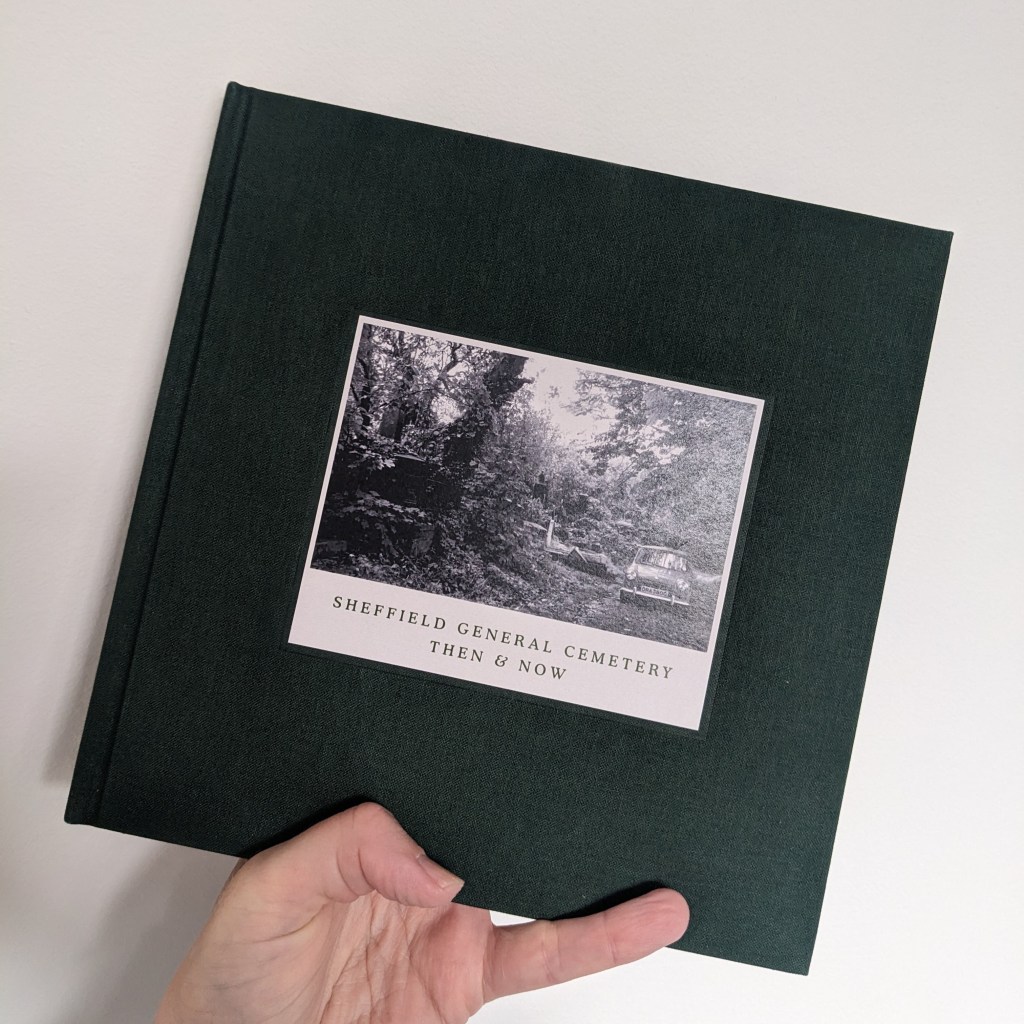
    Later, some of this work was reused in the Trust’s publication, ‘Sheffield General Cemetery Then & Now‘ (2023) by Emma Larsson-Revitt, edited by Sue Turner. Luckily, I was able to get my hands on one of these, as they had a limited run of only 100.

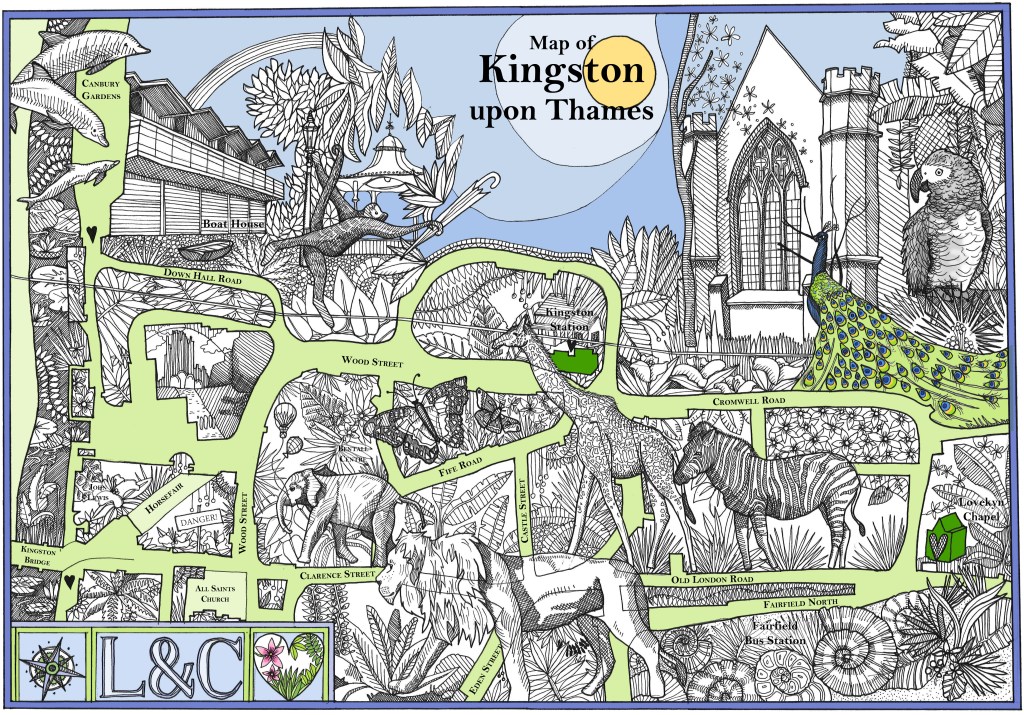
  • L and C were getting married at the historic Lovekyn Chapel, Kingston upon Thames and they needed a map to help guests get there from the station and then onwards through town to the reception venue in Canbury Gardens.

    Although perhaps not the best navigational aid, this was an absolute joy to draw, incorporating many of L and C’s favourite and treasured things!

    Can you spot a monkey as Gene Kelly’s Singing in the Rain character? Or the reference to Wizard of Oz? C’s dress had peacock feathers in the design, and L chose a grey suit and had a love for parrots, so there they are in the grounds of the Chapel. The ammonites represent C’s father who loved geology and I can’t actually remember why it was an animal theme!

    I love drawing maps and would be happy to bring your idea to life. We’d need to discuss requirements, level of detail and some of the ‘must haves’ and ‘like to haves’, so I’d do this work on commission, agreeing a price and timeframe in advance. Contact us with your ideas.

  • Since being let go at work at the end of July 2025, I have been taking a break with my children (one mine, two steps!*) and at the same time remembering and revisiting all of the great projects I’ve been privileged to be part of and the beautiful, inspiring and edgy places I’ve visited.

    I’ve decided to take the plunge and get started with an idea I’ve had for some time, which relates to researching, compiling and creating maps, trails and other products based on the parks and local high streets of Sheffield, and hopefully other UK cities with time.

    Alongside this, I am developing a research and design service to support heritage interpretation, whether that’s an individual house or business history or the production of display panels, leaflets, events maps or something else entirely! Please contact us if we can help with an idea you have.

    This blog will be a mixture of recording the process of setting something like this up, showcasing example projects (both past and current) and local history articles about specific parks, businesses, organisations, features or anything else I come across on my adventures in the archives and local studies libraries I visit.

    I love Sheffield, and I love learning, listening to other people’s stories and uncovering lost pieces of our local history… I hope you will enjoy reading along!

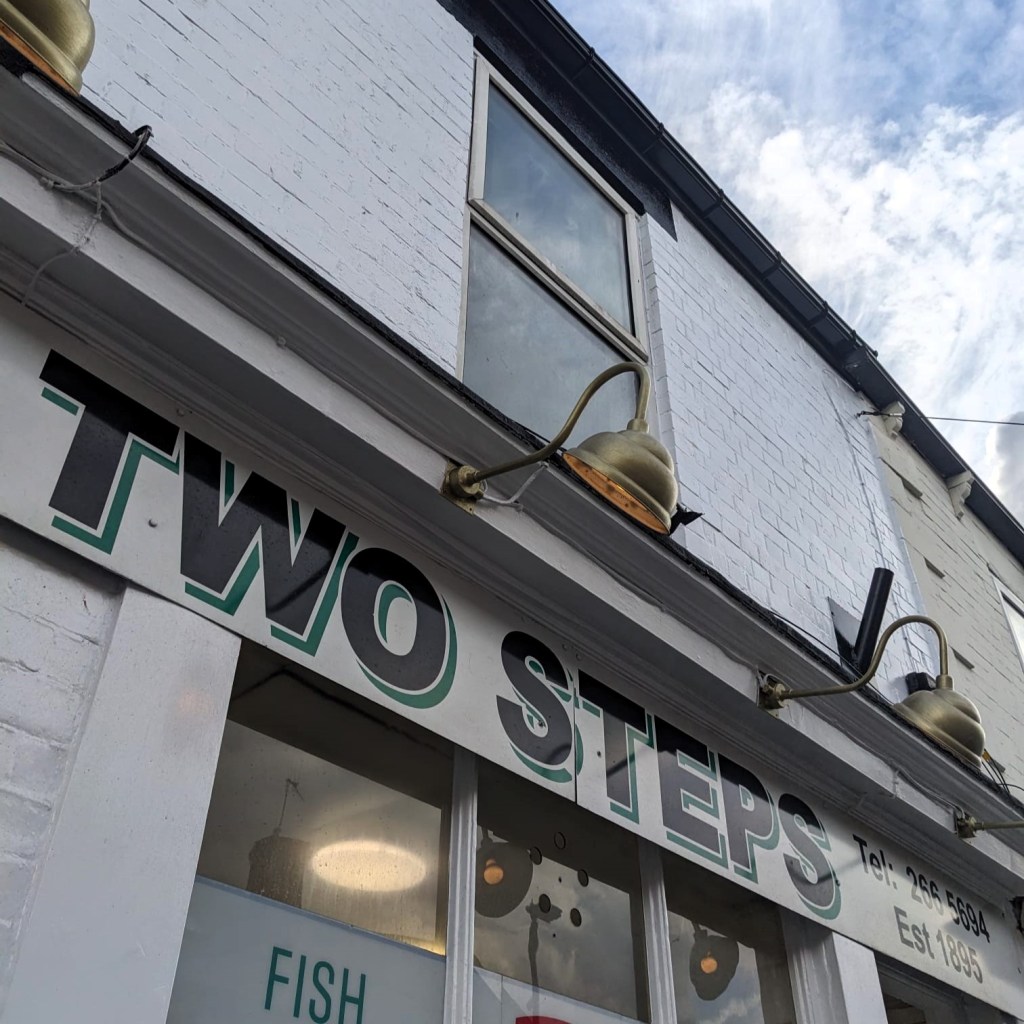
    *Two Steps: The Best Fish Shop in Sheffield (or so I’ve been told)
    Trying to take one or two steps at a time. I’ve got grand plans, very limited money and not much time – but a whole load of enthusiasm and even more resilience!